
How to Talk to Your Parents About Senior Living (Without Hurting Them)

One of the hardest parts of senior care is not logistics — it's the conversation. Many families struggle with how to talk to their parents about senior living. What begins as concern can quickly feel like pressure. Seniors may resist, misunderstand, or feel hurt. The truth is: this is not a one-time discussion. It is a process built on trust, timing, and empathy.
Why These Conversations Are Difficult
Understanding both sides helps avoid conflict.
- For seniors, moving to a retirement home can feel like: Loss of independence, fear of abandonment, disruption of familiar routines, and anxiety about being placed somewhere.
- For children, it often comes from: Concern for safety, guilt, lack of time or support, and fear of emergencies.
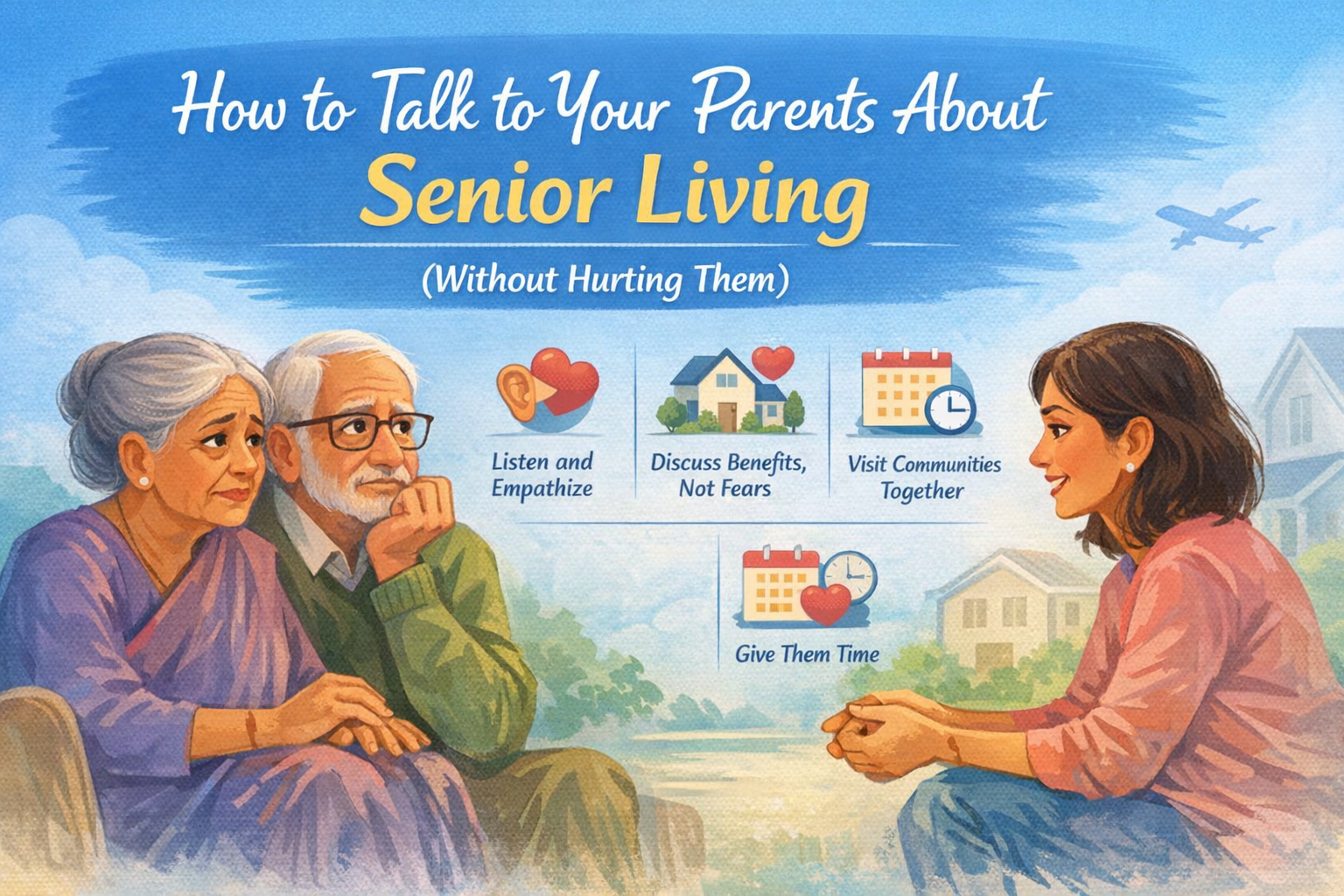
Step 1: Start Early — Not in Crisis
The biggest mistake families make is waiting until something goes wrong. Avoid starting the conversation after a fall, during a hospital stay, or in moments of stress. Instead, introduce the idea gradually when things are stable.
Step 2: Focus on Benefits, Not Problems
Position it as support, not replacement.
- Avoid saying: "You can't manage anymore" or "This is safer for you."
- Instead, reframe: "You'll have company and activities", "There's help available when needed", "It might make daily life easier."
Step 3: Listen More Than You Speak
Let your parents express their fears, preferences, and expectations. Ask open-ended questions like "What worries you about living alone?" or "What kind of environment would you like?" Listening builds trust faster than convincing.
Step 4: Involve Them in the Decision
Never make it feel like a decision is already taken.
- Include them in: Research, shortlisting, visits, and the final evaluation.
- Key insight: When seniors feel included, resistance reduces significantly.
Step 5: Visit Together
A physical visit often changes perception. What families imagine as 'old age homes' are often active communities, social environments, and safe and engaging spaces. Seeing this firsthand reduces fear.
Step 6: Address Emotional Concerns Honestly
Be open about your limitations as a caregiver, your concern for their safety, and your intention to stay involved.
- Reassure them: "This is not about leaving you — it's about supporting you better."
Step 7: Give Them Time
Do not rush the decision. Let the idea settle, revisit the conversation, and allow gradual acceptance. This is a transition, not a transaction.
Common Mistakes to Avoid
- Forcing the decision
- Comparing with others
- Using fear as a motivator
- Having the conversation only once
- Ignoring emotional resistance
How Ad1tage Supports Families
At ad1tage.com, families can explore senior living options together, compare without pressure, understand different care models, and make informed, joint decisions. We support conversations — not just choices.
Talking to parents about senior living requires patience, empathy, and respect. Handled well, it becomes not a difficult conversation — but a shared decision for a better quality of life.
More Blog Posts
A Complete Guide to Choosing a Retirement Home in Bengaluru
Finding the right retirement home is one of the most important decisions for seniors and their famil...
Founders Journey: From experiencing and Identifying Needs to Creating Solutions at ad1tage.com
Over the past three decades, my quest for effective solutions following my mother's chronic illness,...
Doctors and Psychologists in Elder Care: The Medical & Emotional Support Seniors Deserve
Ageing gracefully isn't just about comfort — it's about care. Behind every healthy senior is a suppo...
