
The Hidden Cost of Ageing Alone: It's More Than Just Living by Yourself

When we think about the cost of ageing, we often think about finances — medical bills, medicines, caregivers, and retirement savings. But there is another cost that rarely appears in a financial plan. It is the hidden cost of ageing alone. It cannot be measured in rupees. It is measured in missed conversations, delayed medical attention, silent worries, and the absence of someone to notice when things begin to change. Many older adults live independently and do so with remarkable strength. Independence should always be respected and encouraged. Yet, even the most independent seniors benefit from having a reliable support system around them.
Ageing Alone Is Not the Same as Being Lonely
Living alone does not automatically mean a person is lonely. Many seniors enjoy their independence. They have active routines, maintain friendships, and stay involved in their communities. The concern arises when independence slowly turns into isolation. Sometimes it happens so gradually that neither the senior nor the family notices. Small moments like these may seem insignificant, but together they can signal that additional support is needed:
- A missed meal.
- A forgotten medicine.
- A cancelled outing.
- A phone call that never gets returned.
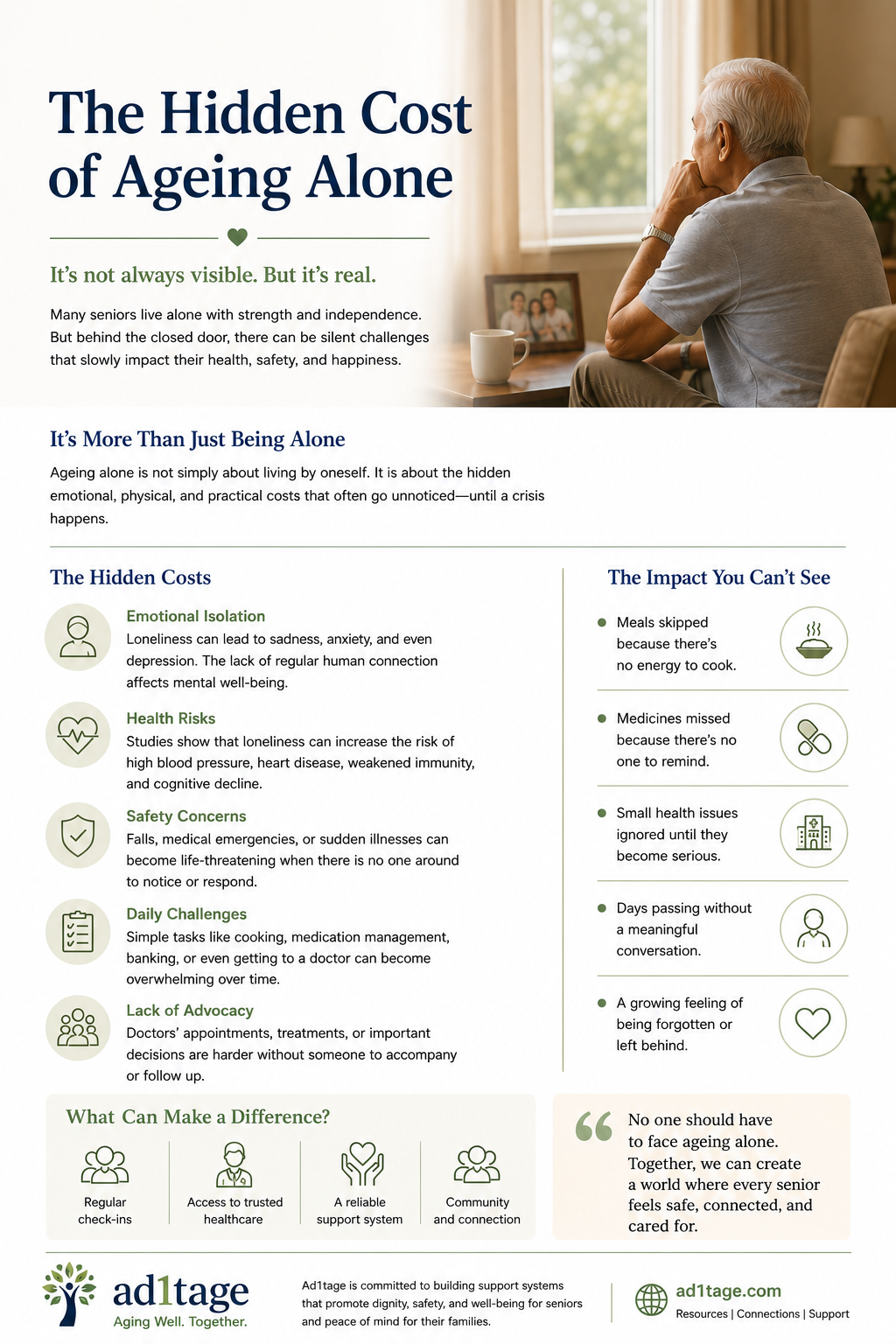
Ageing alone is often invisible — until small everyday changes begin to add up.
1. Emotional Isolation
One meaningful conversation can brighten an entire day. Without regular interaction, many seniors begin to feel disconnected from the world around them — and the emotional effects are often invisible until they become significant. This can contribute to:
- Anxiety
- Depression
- Reduced confidence
- Loss of motivation
2. Health Risks
Small health concerns can become major problems when there is no one to notice them. Early intervention is often what prevents hospitalisation. Common examples include:
- Missed medications
- Poor nutrition
- Dehydration
- Reduced mobility
- Delayed medical consultations
3. Safety Concerns
A simple fall can become a serious emergency if help is delayed. The challenge is not always the emergency itself — it is the lack of immediate support. Many families worry about questions such as:
- Who will notice if something happens?
- Who will accompany them to the doctor?
- Who will help during an unexpected situation?
4. Everyday Tasks Become More Difficult
Simple activities that once took minutes may gradually become exhausting. Many seniors continue managing these tasks quietly without asking for help because they do not want to inconvenience their children. These include:
- Grocery shopping
- Cooking
- Banking
- Paying bills
- Booking medical appointments
- Managing household repairs
5. The Hidden Burden on Families
Ageing alone affects families too. The emotional burden of uncertainty can be overwhelming, especially for children living in another city or country. Adult children often find themselves asking:
- "Did Dad take his medicines?"
- "Why hasn't Mum answered her phone?"
- "Should I travel this weekend just to check on them?"
- Peace of mind: Sometimes, simply knowing that someone nearby can check in makes all the difference.
Why Support Systems Matter
A support system does not replace family. It strengthens family. Sometimes, simply knowing whom to call during an unexpected situation makes all the difference. Support can come from:
- Neighbours
- Friends
- Volunteers
- Caregivers
- Healthcare professionals
- Local senior communities
Independence and Support Can Coexist
Accepting support does not mean losing independence. In fact, the right support often helps seniors remain independent for longer. These are not signs of dependence — they are examples of a caring community:
- A regular wellbeing call.
- A monthly home visit.
- Assistance with a doctor's appointment.
- A neighbour checking in after a heavy rain.
A Realisation for Families
Many children discover their parents are ageing not during a medical emergency, but through small changes in everyday conversations. A parent saying, "I didn't want to trouble you," or "I'll manage somehow," often speaks from love — but these words can also hide genuine needs. Planning ahead is far easier than reacting during a crisis.
Building a Circle of Support
Every senior deserves more than access to services. They deserve connection. That is the difference between living alone and living with support. Imagine knowing there is:
- Someone who can coordinate help.
- A trusted doctor who can visit when needed.
- A caregiver who can step in temporarily.
- A neighbour or volunteer who can check in.
- A community that genuinely cares.
How Ad1tage Aims to Help
At Ad1tage, we believe ageing with dignity is about more than finding service providers. It is about helping families discover trusted resources, build support networks, and make informed decisions before emergencies arise. Whether through informative blogs, provider spotlights, or our evolving Support Circle initiative, our goal is simple: to ensure that no senior has to face the challenges of ageing alone without knowing where to turn for help.
The hidden cost of ageing alone is rarely financial. It is the uncertainty. The missed conversations. The delayed assistance. The feeling that help is far away. As families, neighbours, professionals, and communities, we all have a role in ensuring that older adults continue to live with dignity, confidence, and connection. Because sometimes, the greatest comfort is not knowing that help exists. It is knowing that someone will be there when it is needed most. Explore senior care options and build your support circle on Ad1tage: https://ad1tage.com/
More Blog Posts
A Complete Guide to Choosing a Retirement Home in Bengaluru
Finding the right retirement home is one of the most important decisions for seniors and their famil...
Founders Journey: From experiencing and Identifying Needs to Creating Solutions at ad1tage.com
Over the past three decades, my quest for effective solutions following my mother's chronic illness,...
Doctors and Psychologists in Elder Care: The Medical & Emotional Support Seniors Deserve
Ageing gracefully isn't just about comfort — it's about care. Behind every healthy senior is a suppo...
